

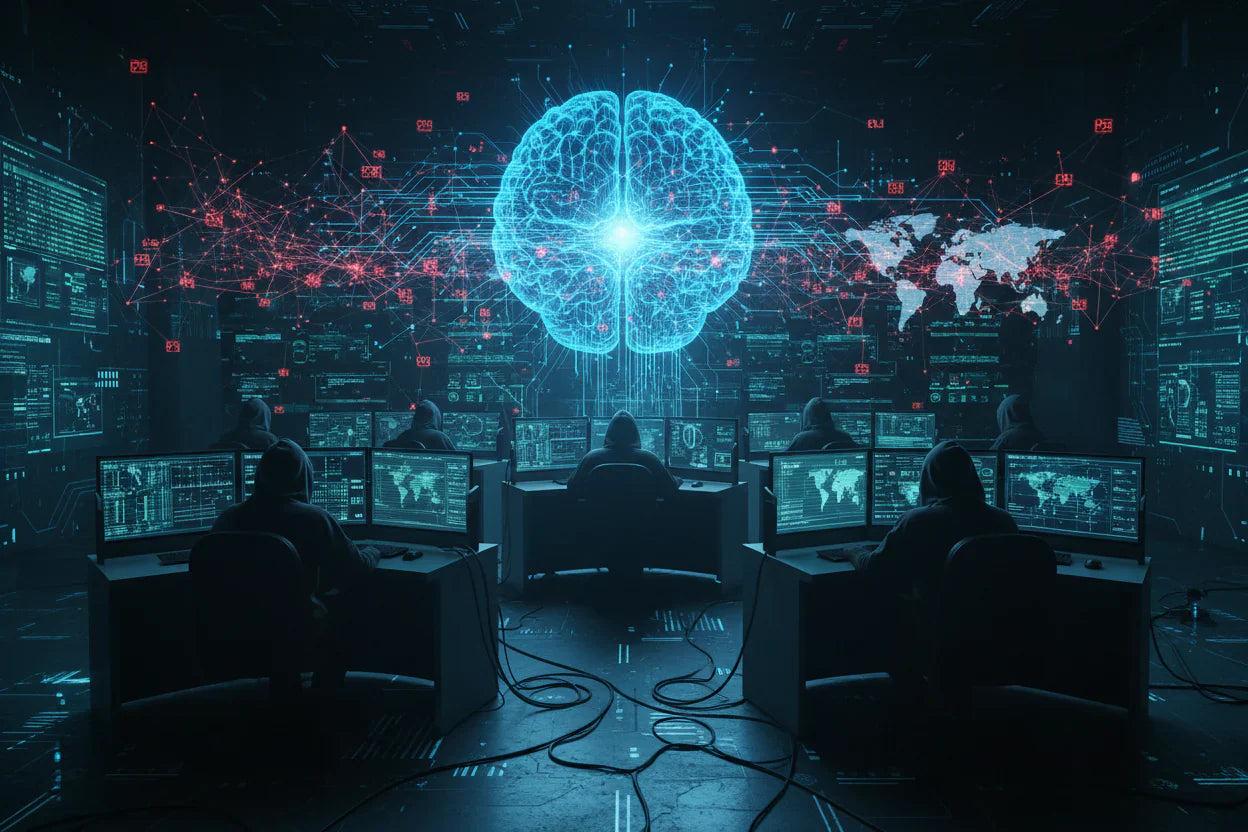
Hackers Are Using AI: New Cybersecurity Risks Emerging in 2026
Artificial Intelligence has become one of the most revolutionary technologies of the modern era. Businesses use it to improve productivity, doctors use it to assist with medical diagnoses, and content creators rely on it to generate ideas and automate tasks. However, as AI continues to evolve, cybercriminals are finding new ways to exploit this powerful technology for malicious purposes.
In 2026, cybersecurity experts around the world are warning about a dramatic increase in AI-powered cyberattacks. Unlike traditional hacking methods, AI-driven attacks can learn, adapt, and operate at a speed that human hackers simply cannot match. This shift is creating a new generation of cyber threats that are more sophisticated, more convincing, and far more difficult to detect.
Why AI Is Changing Cybersecurity
For years, cybersecurity has been a battle between attackers and defenders. Security teams develop new protections, and hackers search for ways to bypass them. AI has dramatically accelerated this cycle.
Hackers can now use AI to automate tasks that previously required significant time and expertise. AI systems can scan thousands of websites for vulnerabilities, generate realistic phishing messages, analyze stolen data, and even mimic human behavior online.
The result is a cybersecurity landscape where attacks are becoming more targeted, personalized, and successful than ever before.
AI-Powered Phishing Attacks
Phishing remains one of the most common forms of cybercrime, but AI has made it significantly more dangerous.
Traditional phishing emails often contained spelling mistakes, poor grammar, or suspicious formatting. These warning signs made them easier to identify. Today, AI can generate highly professional emails that closely resemble legitimate communications from banks, employers, online services, and government agencies.
Cybercriminals can use publicly available information from social media platforms to create personalized messages that appear authentic. An email may reference your workplace, recent purchases, or personal interests, making it much more convincing.
As AI continues to improve, phishing scams are becoming increasingly difficult to distinguish from genuine communications.
The Rise of Deepfake Scams
Deepfake technology has become one of the most concerning cybersecurity threats in 2026.
Using AI, cybercriminals can create realistic videos, images, and audio recordings that imitate real people. These fake recordings can be used to spread misinformation, commit fraud, or manipulate victims.
Imagine receiving a phone call that sounds exactly like your boss instructing you to transfer company funds. Or a video message appearing to come from a family member requesting urgent financial assistance. These scenarios are no longer science fiction.
Several organizations have already reported financial losses caused by deepfake impersonation attacks. As the technology becomes more accessible, experts expect these incidents to increase dramatically.
AI-Driven Password Cracking
Passwords remain a critical component of online security, but AI is making password attacks more effective.
Advanced AI systems can analyze patterns in leaked passwords and predict commonly used combinations. They can also automate brute-force attacks, allowing hackers to test thousands of password variations in a short period.
Weak passwords are particularly vulnerable. Simple combinations such as names, birthdays, or common words can often be cracked within minutes.
This growing threat highlights the importance of strong, unique passwords and multi-factor authentication.
Smarter Ransomware Attacks
Ransomware continues to be one of the most profitable forms of cybercrime, and AI is making these attacks even more dangerous.
AI-powered ransomware can identify valuable files, prioritize critical systems, and adapt its behavior based on security measures it encounters. Some advanced ransomware variants can even determine the most effective moment to launch an attack.
Businesses, hospitals, schools, and government agencies remain primary targets because they often cannot afford prolonged downtime.
Once systems are encrypted, victims may face enormous financial losses, operational disruptions, and reputational damage.
Automated Vulnerability Discovery
One of AI’s most powerful capabilities is its ability to analyze vast amounts of data quickly.
Cybercriminals can use AI to scan websites, applications, and networks for security weaknesses. Instead of manually searching for vulnerabilities, attackers can automate the process and identify targets at a much larger scale.
This means newly discovered security flaws can be exploited faster than ever before, sometimes before organizations have an opportunity to install security updates.
AI-Powered Malware
Malware is also evolving through artificial intelligence.
Traditional antivirus software often relies on known threat signatures to detect malicious programs. AI-powered malware can modify its behavior, change its code structure, and adapt to different environments, making detection more difficult.
Some security researchers believe future malware may be capable of learning from failed attacks and automatically adjusting its tactics to improve success rates.
This adaptive capability represents a major challenge for cybersecurity professionals.
Social Engineering at a New Level
Social engineering attacks exploit human psychology rather than technical vulnerabilities. AI is making these attacks significantly more effective.
By analyzing online activity, social media posts, and public information, AI can help cybercriminals create highly targeted scams. Attackers can identify personal interests, relationships, workplaces, and communication styles to build trust with potential victims.
The more personalized an attack becomes, the more likely it is to succeed.
How to Protect Yourself
Although AI-powered cyber threats are increasing, there are several practical steps individuals and organizations can take to improve their security:
Use Multi-Factor Authentication (MFA)
Adding an extra layer of security makes it much harder for attackers to access accounts, even if passwords are compromised.
Create Strong Passwords
Use long, unique passwords for every account and consider using a password manager.
Keep Software Updated
Install security updates promptly to reduce exposure to newly discovered vulnerabilities.
Verify Unusual Requests
Always verify financial transactions, password reset requests, or sensitive communications through trusted channels.
Be Cautious with Emails and Messages
Avoid clicking suspicious links or downloading unexpected attachments.
Educate Yourself About Cyber Threats
Awareness remains one of the most effective defenses against cybercrime.
The Future of Cybersecurity
The relationship between AI and cybersecurity is becoming increasingly complex. While cybercriminals are using AI to develop more sophisticated attacks, security professionals are also using AI to strengthen defenses.
Modern security systems can analyze network activity, detect suspicious behavior, and respond to threats faster than human teams alone. This ongoing battle between offensive and defensive AI technologies will likely define the future of cybersecurity.
As we move further into 2026 and beyond, staying informed about emerging threats will be essential. AI is reshaping the digital world, and understanding its risks is the first step toward protecting your data, privacy, and online identity.